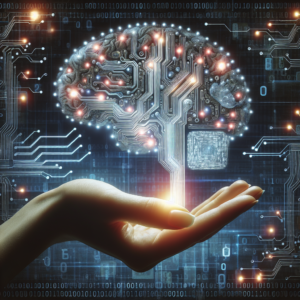
Artificial General Intelligence (AGI) has long been a staple of science fiction, with popular portrayals including sentient robots, advanced artificial beings, and intelligent machines that have the ability to think, reason, and learn just like humans. But in recent years, AGI has moved from the realm of fiction to reality, with scientists and researchers working tirelessly to develop machines that possess the cognitive capabilities and intellect of a human.
The journey of AGI began with the development of artificial intelligence (AI) in the 1950s and 1960s. Early AI systems were limited in their capabilities, able to perform specific tasks or follow predetermined rules, but lacking the ability to learn, adapt, or think creatively. However, as technology advanced and computing power increased, researchers began to explore the possibilities of creating AI systems that could mimic human intelligence.
One of the key breakthroughs in the development of AGI was the emergence of deep learning and neural networks. These technologies, inspired by the structure and function of the human brain, use networks of interconnected nodes to process and analyze data in a way that mimics the way the human brain processes information. This has enabled AI systems to learn from data, recognize patterns, and make decisions based on complex information, leading to significant advancements in areas such as image recognition, natural language processing, and predictive analytics.
Another important milestone in the journey towards AGI was the development of reinforcement learning, a type of machine learning that allows AI systems to learn by trial and error, receiving feedback and rewards for successful actions. This has enabled AI systems to learn complex tasks and strategies, such as playing video games, driving cars, or even developing new drugs, through a process of continuous learning and improvement.
As a result of these advancements, AGI is now closer to becoming a reality than ever before. Researchers are working on developing AI systems that can understand and respond to human emotions, think critically and creatively, and learn autonomously from their experiences. This has the potential to revolutionize industries such as healthcare, finance, and transportation, and to improve the quality of life for people around the world.
However, the development of AGI also raises important ethical and societal questions. With the ability to think, reason, and learn like humans, AGI systems have the potential to outperform humans in many tasks, leading to concerns about automation, unemployment, and the impact on society. Researchers and policymakers are now working to address these challenges and ensure that AGI is developed and deployed in a responsible and ethical manner.
In conclusion, the journey of AGI from science fiction to reality is a testament to the power of human ingenuity and innovation. As researchers continue to push the boundaries of technology and explore the possibilities of artificial intelligence, we are on the brink of a new era of intelligent machines that have the potential to revolutionize the way we live, work, and interact with the world around us. With careful planning, collaboration, and ethical consideration, AGI has the potential to drive positive change and create a brighter future for all.
About The Author